LED Digital Displays Boost Reliability of Smart Energy Meters
Industry Background and Market Demand
The global smart energy meter market is projected to grow at a CAGR of 6.8% from 2023 to 2030, driven by increasing energy efficiency regulations and the need for real-time consumption monitoring. A critical component in these meters is the display unit, which has evolved from traditional LCDs to high-visibility LED digital displays.
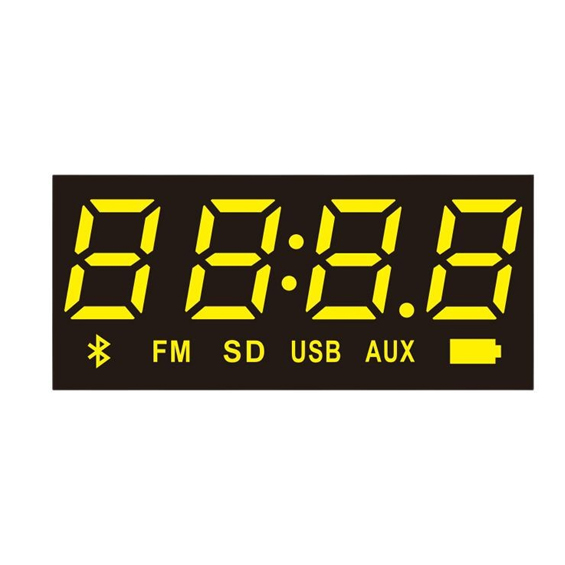
Utilities and industrial users demand reliability in harsh environments—extreme temperatures, moisture, and long-term readability are non-negotiable. LED-based displays address these challenges with superior brightness (≥1,000 cd/m²), wider viewing angles (up to 170°), and a lifespan exceeding 100,000 hours. Unlike segment-based LCDs, dot-matrix LED displays enable dynamic data presentation, including real-time power quality metrics and tariff alerts.
Core Technology: How LED Displays Enhance Meter Performance
1. Optical Performance and Durability
LED digital displays use inorganic semiconductor materials (e.g., GaAs/GaP for red/green, InGaN for blue/white), ensuring stable luminance with minimal degradation. Their contrast ratio (>10,000:1) remains effective in direct sunlight, a common pain point for LCDs in outdoor meter installations.
2. Power Efficiency and Integration
Modern LED drivers (e.g., constant-current ICs like TI’s TLC5926) reduce energy consumption by 40% compared to legacy solutions. Integration with meter MCUs (e.g., STM32L4 series) allows adaptive brightness control based on ambient light sensors, further optimizing power use.
3. Structural Resilience
A typical industrial-grade LED display module consists of:
- Front Panel: Polycarbonate with anti-UV coating (IEC 60068-2-5 compliant)
- LED Array: SMD 3535 or 2020 packages with silicone encapsulation (IP65-rated)
- PCB Substrate: High-Tg FR4 with ENIG finish for corrosion resistance
Key Factors Affecting Quality and Performance
1. Thermal Management
Junction temperature (Tj) must stay below 85°C to prevent luminous decay. Designs incorporate aluminum heat-spreader layers and thermal vias in PCBs.
2. Manufacturing Precision
Automated pick-and-place machines (e.g., Yamaha YSM20) ensure ±25μm LED placement accuracy, critical for uniform brightness.
3. Supplier Component Traceability
Top-tier manufacturers require LED suppliers (e.g., Nichia, Osram) to provide full I-V curve datasets and binning reports for color consistency.
Supply Chain Considerations
Procurement teams evaluate suppliers based on:
- MTBF Data: Minimum 150,000 hours at 25°C ambient
- Compliance: IEC 62056-21 for meter communication, UL 94 V-0 flammability
- Localization: Regional assembly hubs (e.g., Eastern Europe for EU markets) to mitigate logistics risks
Industry Challenges and Solutions
Common Failures:
- Moisture Ingress: Addressed by conformal-coated driver circuits (MIL-STD-810G method 507.6)
- ESD Damage: TVS diodes (e.g., Littelfuse AXGD series) protect against 15kV air discharges
Case Example:
A German utility replaced LCDs with LED displays in 500,000 smart meters, reducing field service calls by 62% over three years. The LED units maintained readability at -30°C, where LCD response times previously caused data lag.
Emerging Trends
1. Wireless Updates: Bluetooth LE-enabled displays allow firmware upgrades without physical access.
2. Color Coding: RGB LEDs visually indicate consumption thresholds (e.g., red for peak demand).
3. Sustainable Materials: Bio-based PCBs (e.g., Ricoh’s biomass resins) entering pilot production.
FAQ
Q: How do LED displays impact smart meter total cost of ownership?
A: While 15–20% more expensive upfront than LCDs, LED units reduce maintenance costs by 3–5× over a 15-year lifespan.
Q: Can existing meter designs retrofit LED displays?
A: Yes, provided the host PCB supports 3.3–5V logic and has ≥8mm z-height clearance. Pin-compatible modules (e.g., Winstar’s WDG-S series) simplify upgrades.
Q: What’s the typical lead time for industrial-grade LED displays?
A: 8–12 weeks for custom designs; standard modules ship in 2–4 weeks with MOQ of 1,000 units.
The shift to LED digital displays reflects broader industrial priorities: minimizing downtime, enabling data-rich interfaces, and future-proofing infrastructure. As smart grids evolve, these displays will likely incorporate AI-driven predictive alerts—though their core advantage remains engineering-grade reliability.
 286315373@qq.com
 +86 18811889973





 Phone
Phone
Comment
(0)